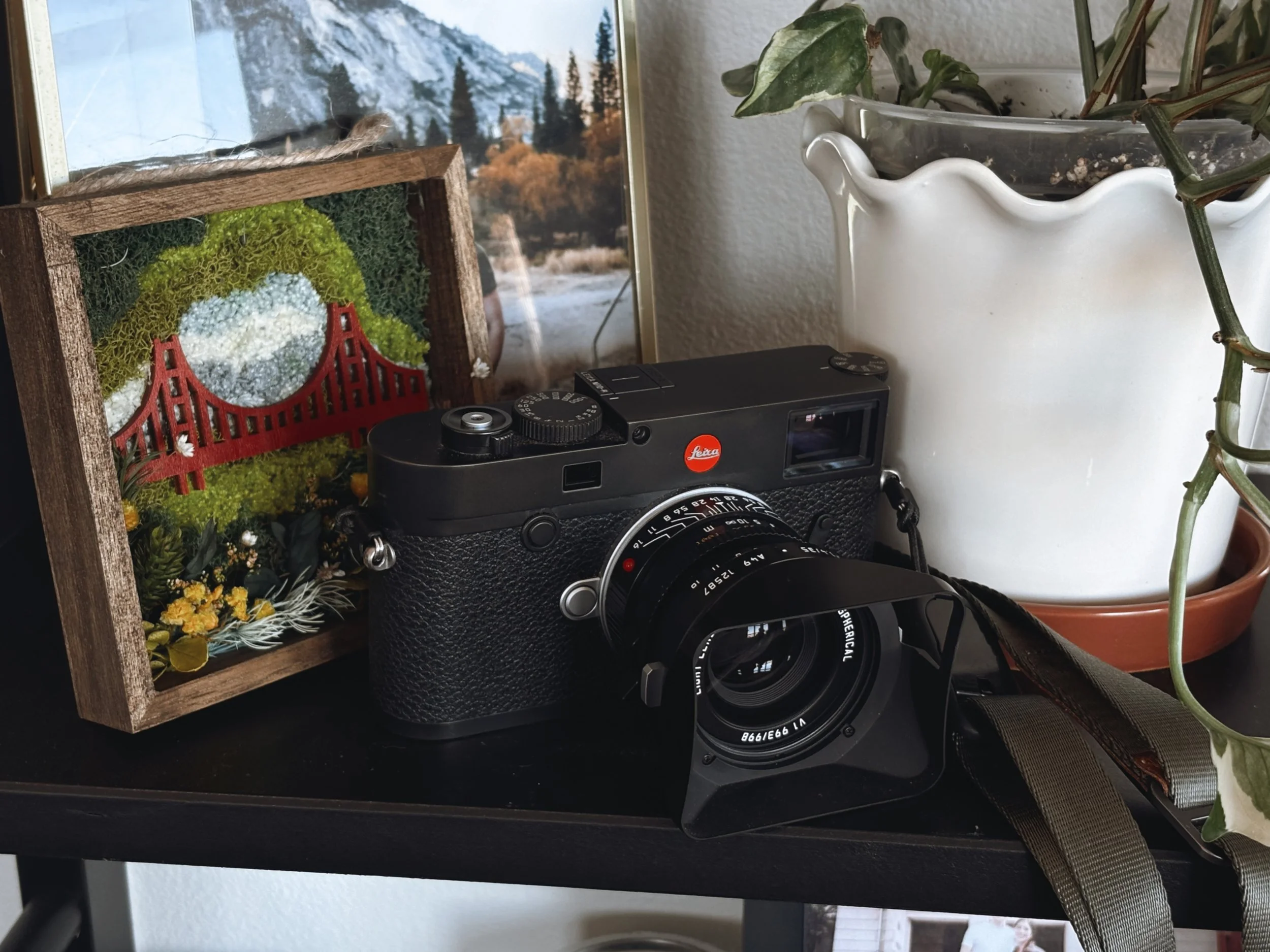
Updated July 2026
Introduction
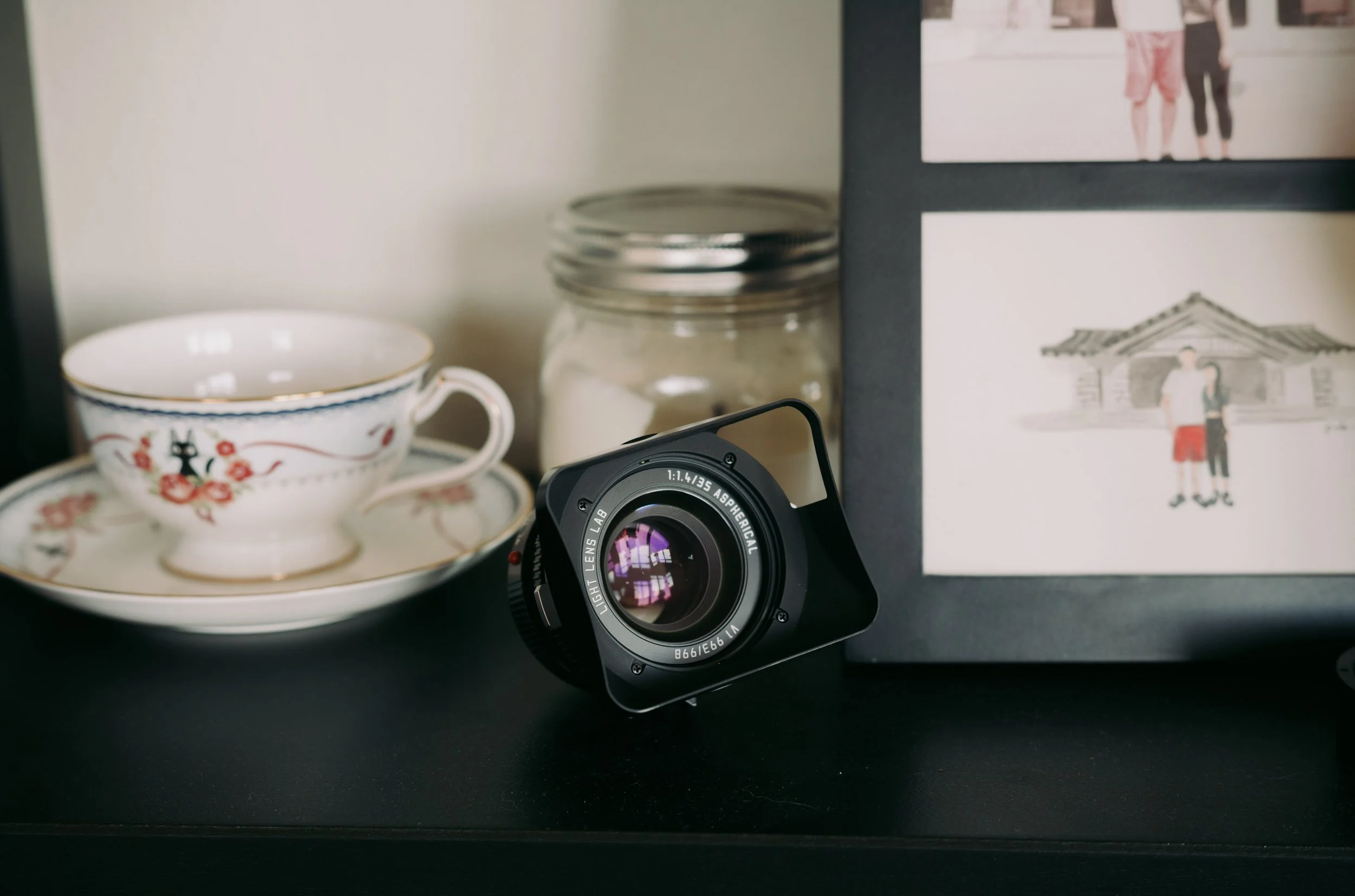
Many other reviews have already explained the what this lens is, so I’ll keep it short. In the early 1990s, the very first version of the Leica 35mm Summilux to include an aspherical surface (sometimes called “double aspherical” or AA) was sold in very small quantities before being discontinued. Due to its rarity, a legitimate copy costs around US$20,000 today. I’ll admit, when I learned about this lens, I had some desire for it, because of its compact design and potentially different image quality than the subsequent version of the 35 Summilux, which suffers from pretty bad focus shift. But I never even remotely imagined spending $20k to get one.
Light lens lab has been making replicas of classic Leica lenses such as the 50 Summicron Rigid, but the 35mm f/1.4 Aspherical is a departure from their typical business because it’s a comparatively modern design with aspherical surfaces. I was pretty excited to learn they were making this lens, because it’s a cool chance to finally learn what the mythical, essentially-unobtainable 35 Summilux AA was like. I reached out to LLL and was loaned a copy for review.
As I’ll show below, in addition to being a more affordable replica of a historically significant lens, the LLL 35/1.4 is a compelling offering in its own right.
Leica M10-R, f/1.4
Leica M10-R
About this lens
LLL provides a lens diagram, which I have to assume is the same as the original Leica version (I couldn’t find one online to compare). Interestingly, it is essentially the same layout as the subsequent versions of the 35 Summilux, but with different placement of the aspheres. It is a bit funny that the older design has twice as many aspherical surfaces as the modern version that performs significantly better.
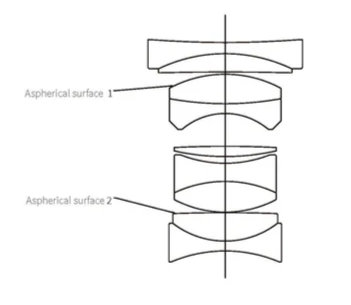
LLL 35/1.4
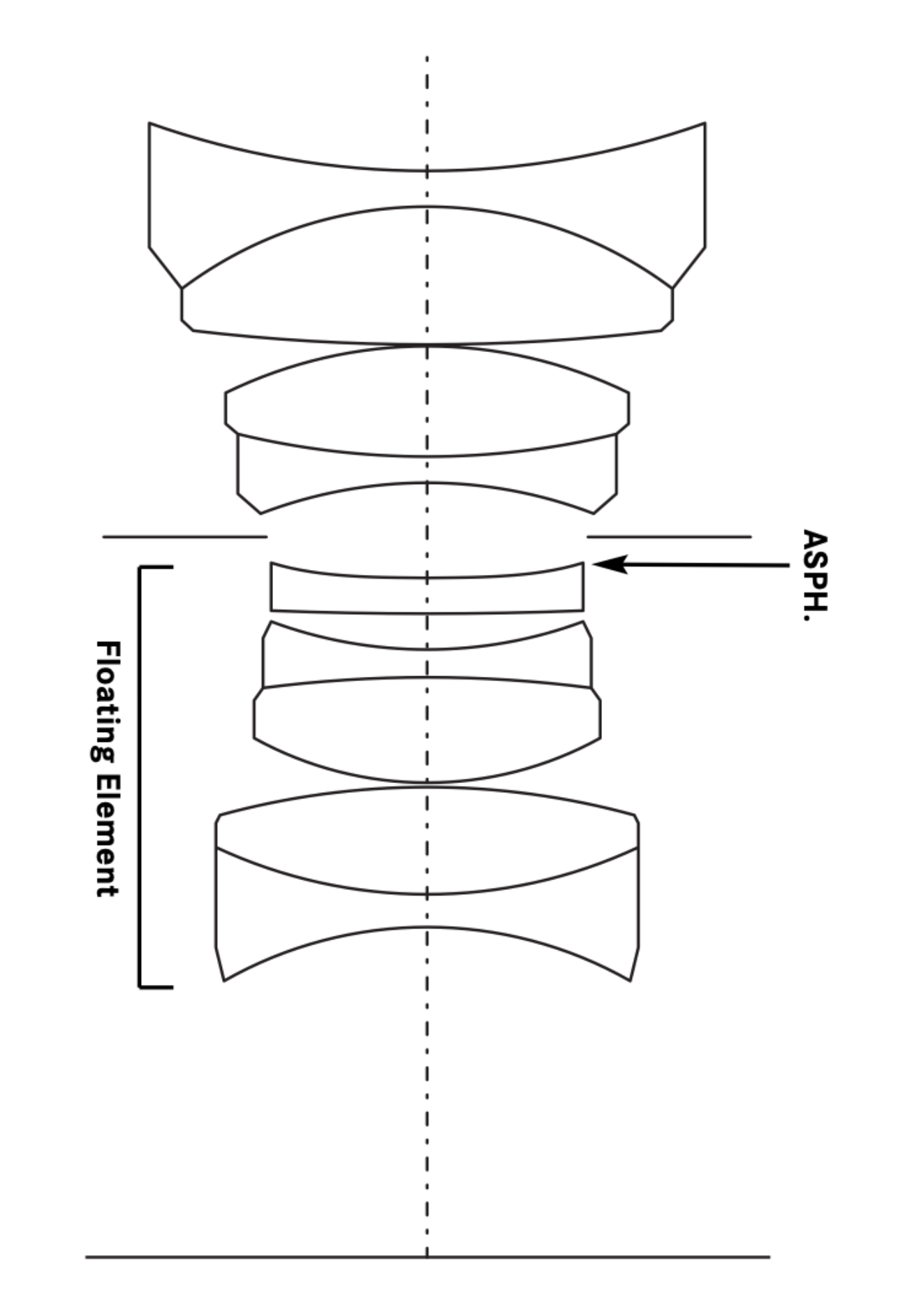
Leica 35 Summilux FLE
The LLL 35/1.4 has a minimum focus distance of 0.7m, just like the original. Unlike the 35 Summilux FLE and FLE II, the LLL has no floating group, which reduces image quality at close focus distances.
The LLL 35/1.4 comes in three versions: aluminum black paint, aluminum silver chrome, and titanium.
Build quality and mechanics
The LLL 35/1.4 is all metal and feels every bit as solid as a real Leica lens. The aperture and focus rings also felt as good as a Leica lens.
Unlike the plastic hood on the original version, the LLL 35/1.4’s hood is fully metal. The hood attachment is a bit loose and can rattle but this is a limitation of the mechanism they are recreating from the original.
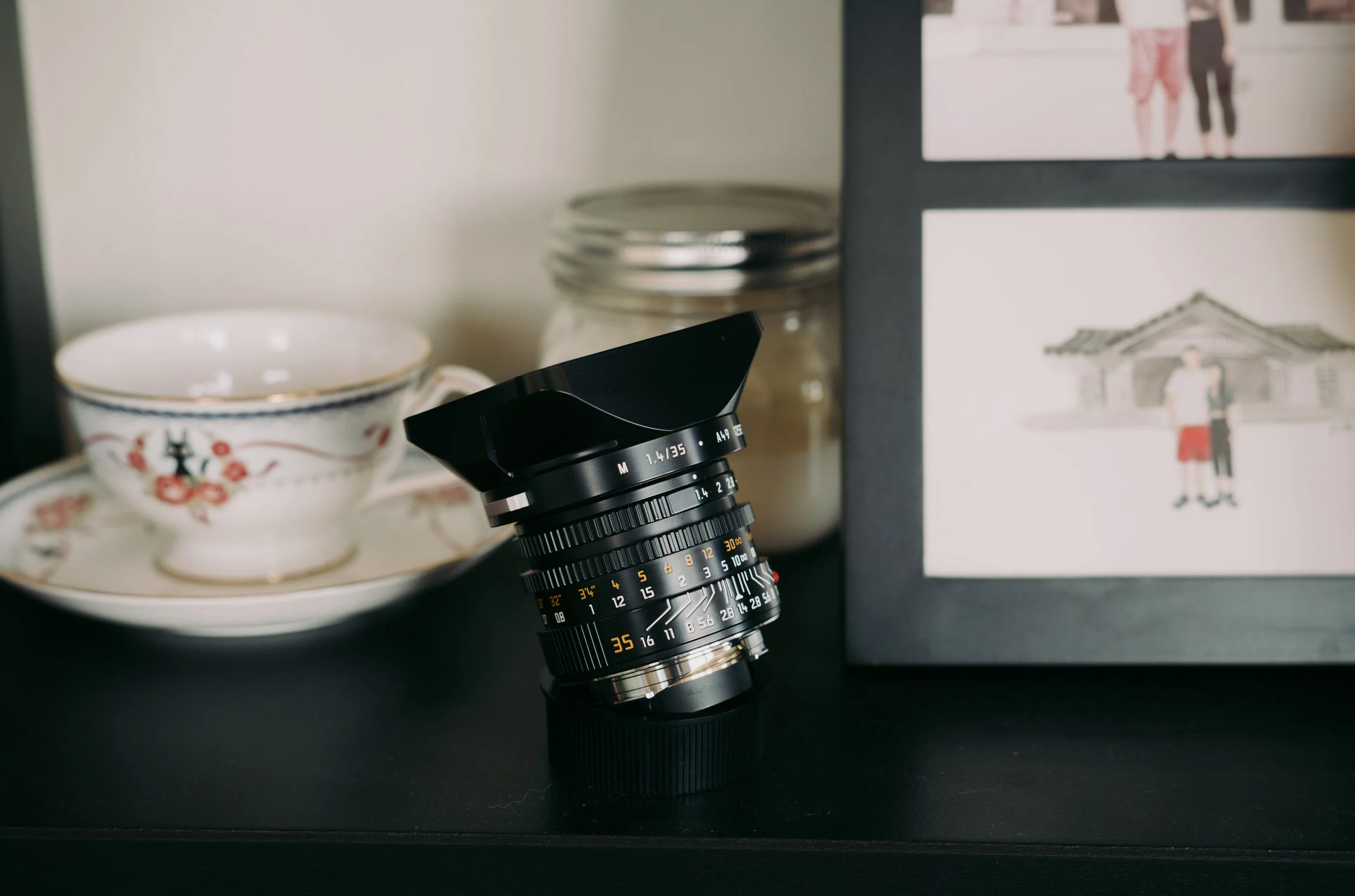
I don’t normally comment on a lens’s packaging, but I was truly impressed with the unboxing experience of the LLL 35/1.4. It’s at least as luxurious as unboxing a Leica lens, complete with a leather lens pouch. Even the front and rear caps are metal, which I have never experienced with any other lens brand.
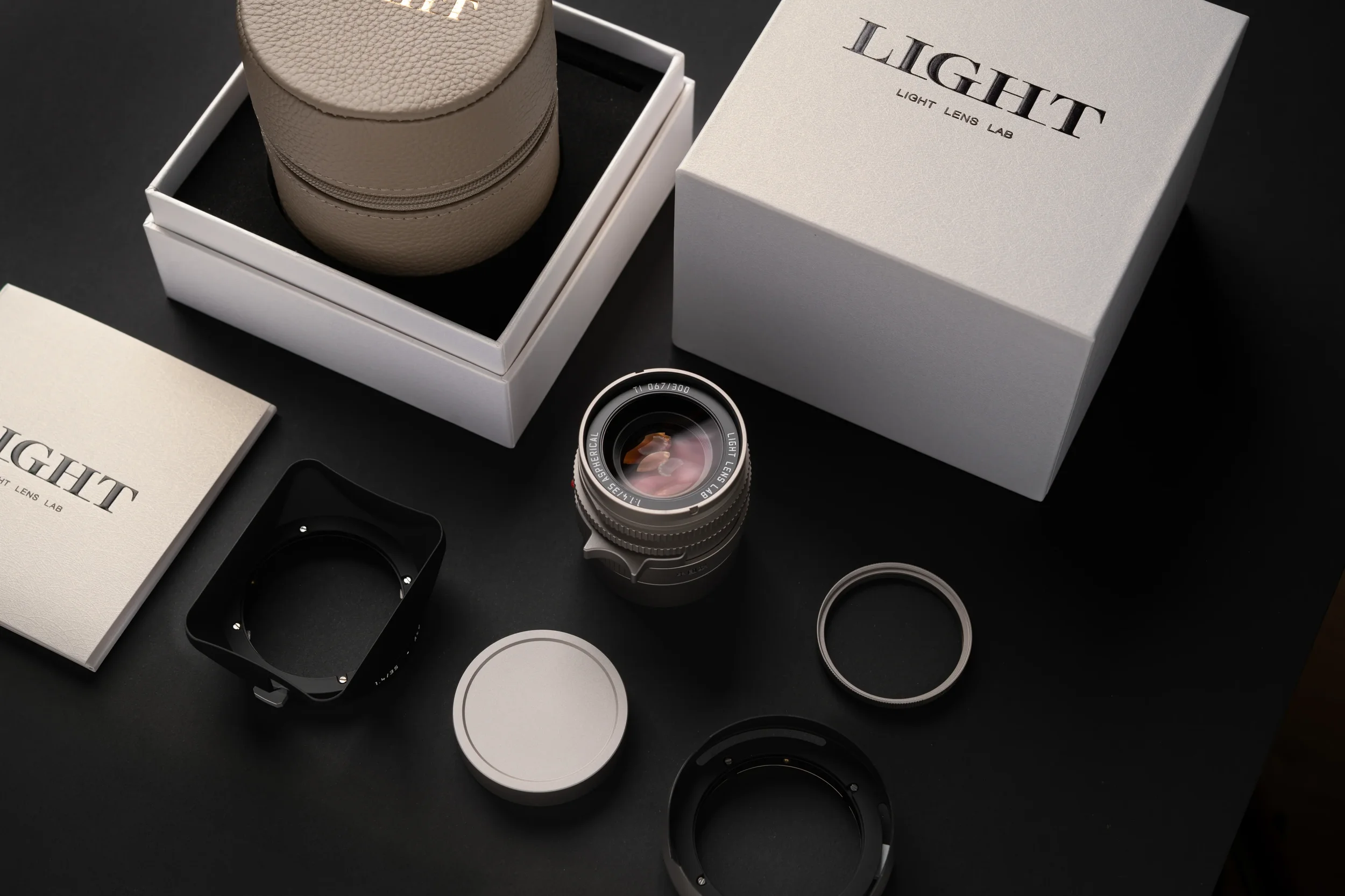
Image taken from LLL
Size and handling
The LLL 35/1.4 is noticeably more compact than the 35 Summilux FLE II. It looks and feels great on an M body, and it’s always a nice thing to have such a large aperture in such a small package. But the LLL 35/1.4 is also dense, to the point that I was surprised to learn it is made of aluminum and not brass. So although it is smaller than the latest version of the 35 Summilux, the weight is essentially the same.
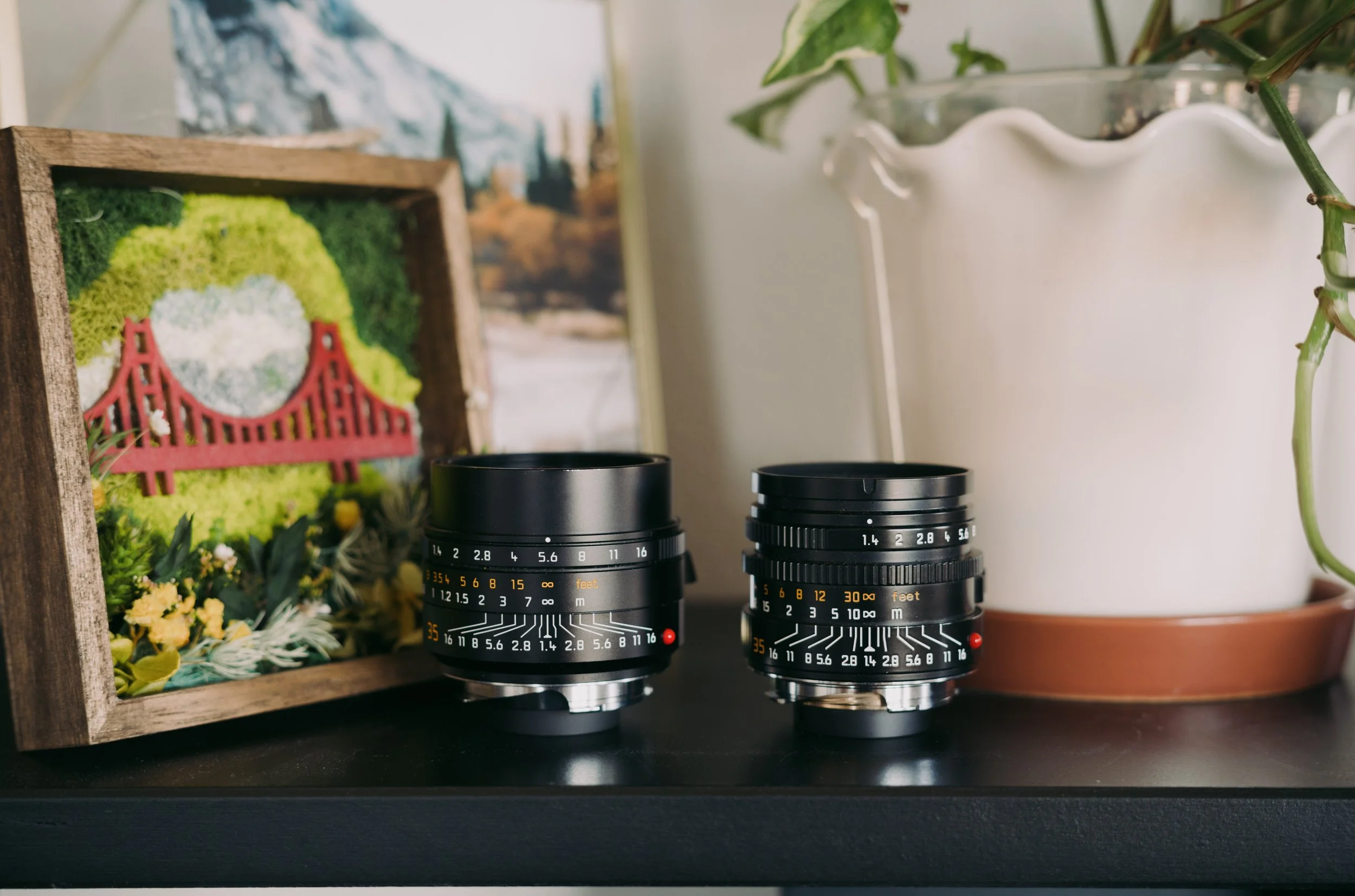
35 FLE V2 (left) and LLL 35/1.4 (right)
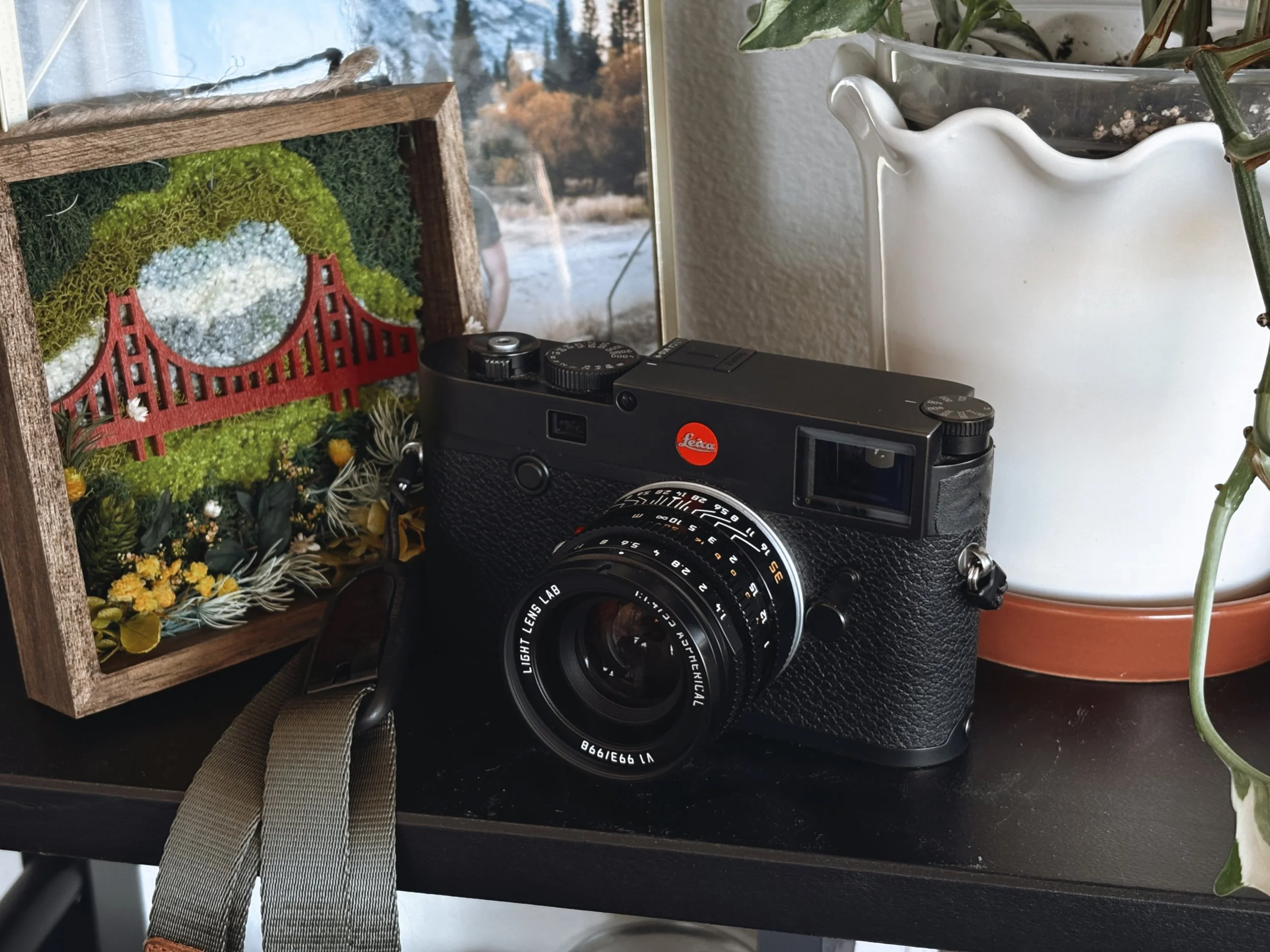
LLL 35/1.4 on the Leica M10-R
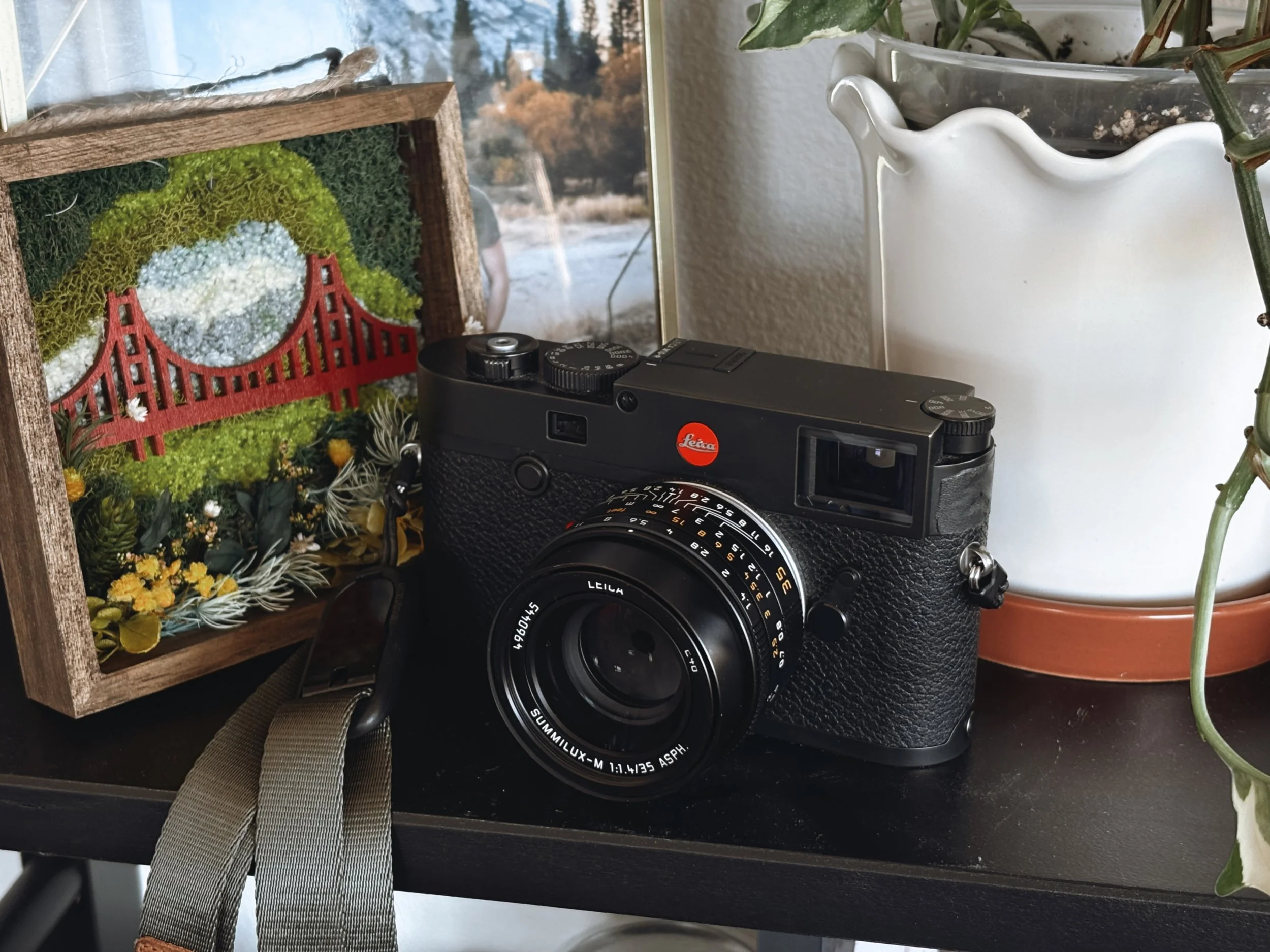
Leica 35 FLE V2 on the Leica M10-R
The focus tab and aperture rings are well-placed, except that it’s sometimes a little bit tricky grabbing the aperture ring without touching the knurled focus ring.
One oddity to the lens hood design is that while filters can be used with the hood, they have to be attached with the hood already in place, which is quite difficult and awkward.
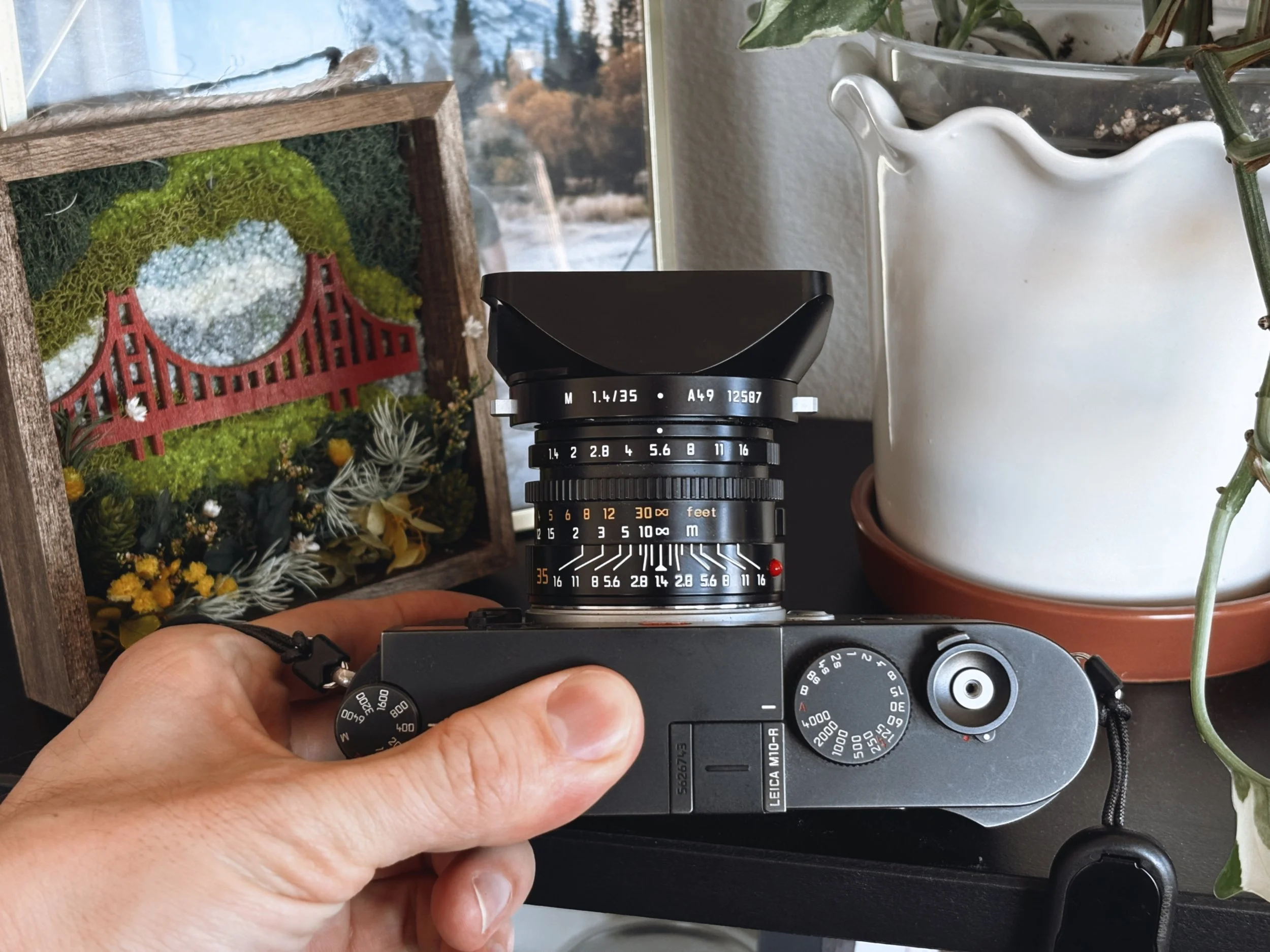
Image quality
Distortion:
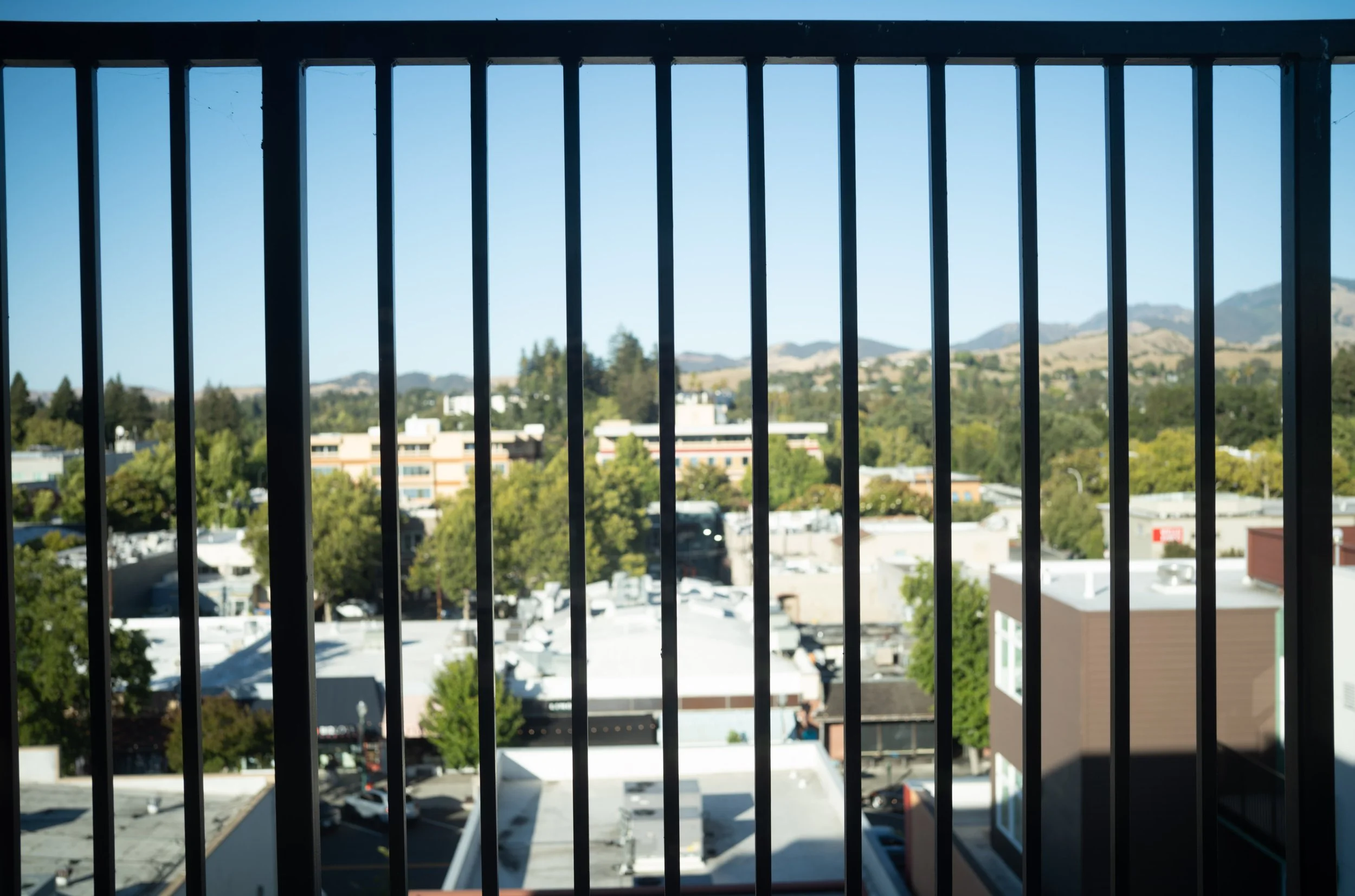
Essentially none. This is actually a better performance than the newer versions of the Leica 35 Summilux.
Vignetting:
There’s pretty strong vignetting at f/1.4 without a lens profile. The profile for the original Leica 35 Double Aspherical can be applied in-camera, which only slightly corrects the vignetting.

Uncoded, f/1.4
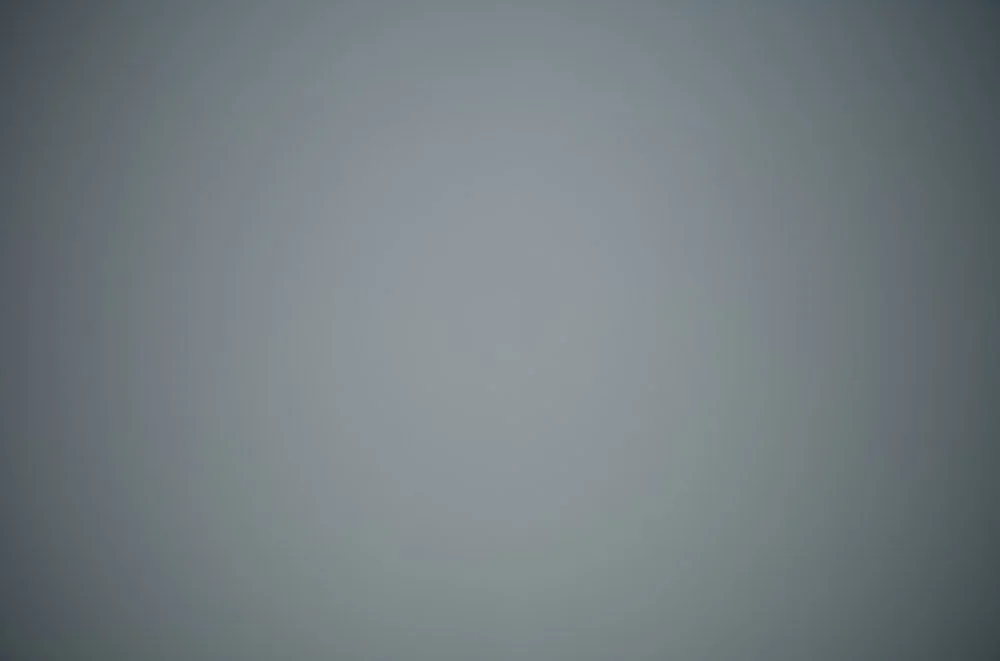
Uncoded, f/5.6
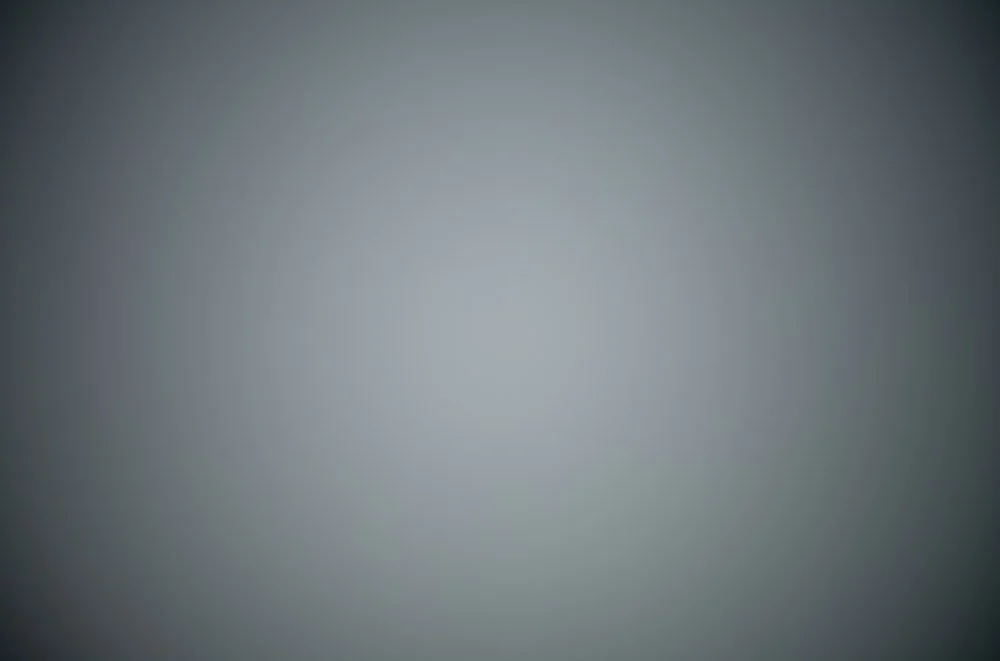
Coded as 35 Summilux AA, f/1.4
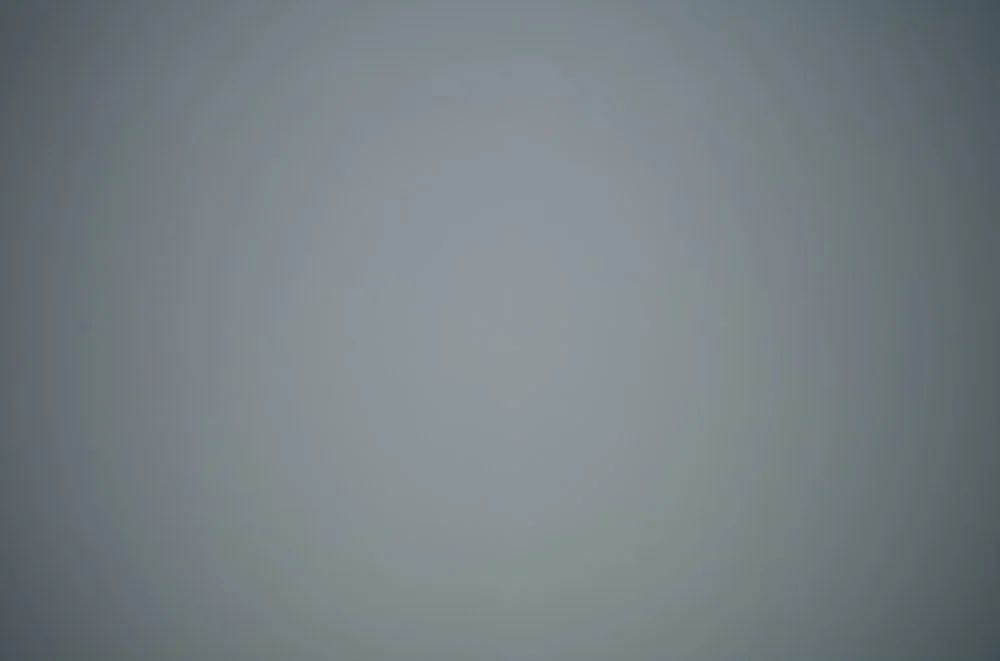
Coded as 35 Summilux AA, f/5.6
Longitudinal chromatic aberration (AKA spherochromatism):
I did not do formal tests of this, but I found longitudinal CA to be a non-issue, and it’s at least as well-controlled as on the current 35 Summilux.
Leica M10-R, f/1.4
Bokeh/rendering:
I like the look of 35mm f/1.4 lenses in general, and the LLL 35/1.4 is no exception. There is a tasteful amount of soap-bubble bokeh in the background, transition zones look good, and as mentioned before, chromatic aberration is well-controlled. I find the resulting rendering to be quite pleasing.
I didn’t do side-by-side bokeh tests with my 35 FLE II, but thanks to Fred Miranda’s testing we know that the LLL actually has slightly cleaner bokeh than the modern Summilux.
Leica M10-R, f/1.4
Leica M10-R, f/1.4
Leica M10-R, f/1.4
Leica M10-R, f/1.4
Comparison vs the original
Based on various communications from LLL, it appears that in designing this lens, they struck a sort of balance between matching the optical characteristics of the original, and tweaking it to perform better on digital sensors. This reminds me of how Leica has tweaked several of their optical designs from the film era, resulting in noticeably better sharpness on digital sensors (e.g. 28 Summicron V2 and V3, 35 Summilux FLE and FLE II).
I don’t have access to an original Leica 35 Summilux Double Aspherical, so I can’t validate how accurately the LLL replicates the original. But there are some direct comparisons online (here and here) which demonstrate pretty clearly that the LLL has noticeably smoother bokeh than the original. I suspect there is also a difference in field curvature, which is a typical result of modifying lens designs to perform better on digital. Other characteristics including sharpness, contrast, and chromatic aberration appear pretty similar.
Leica M10-R, f/1.4
Leica M10-R, f/1.4
Sharpness, infinity:


Leica 35 FLE II, center @ f/1.4
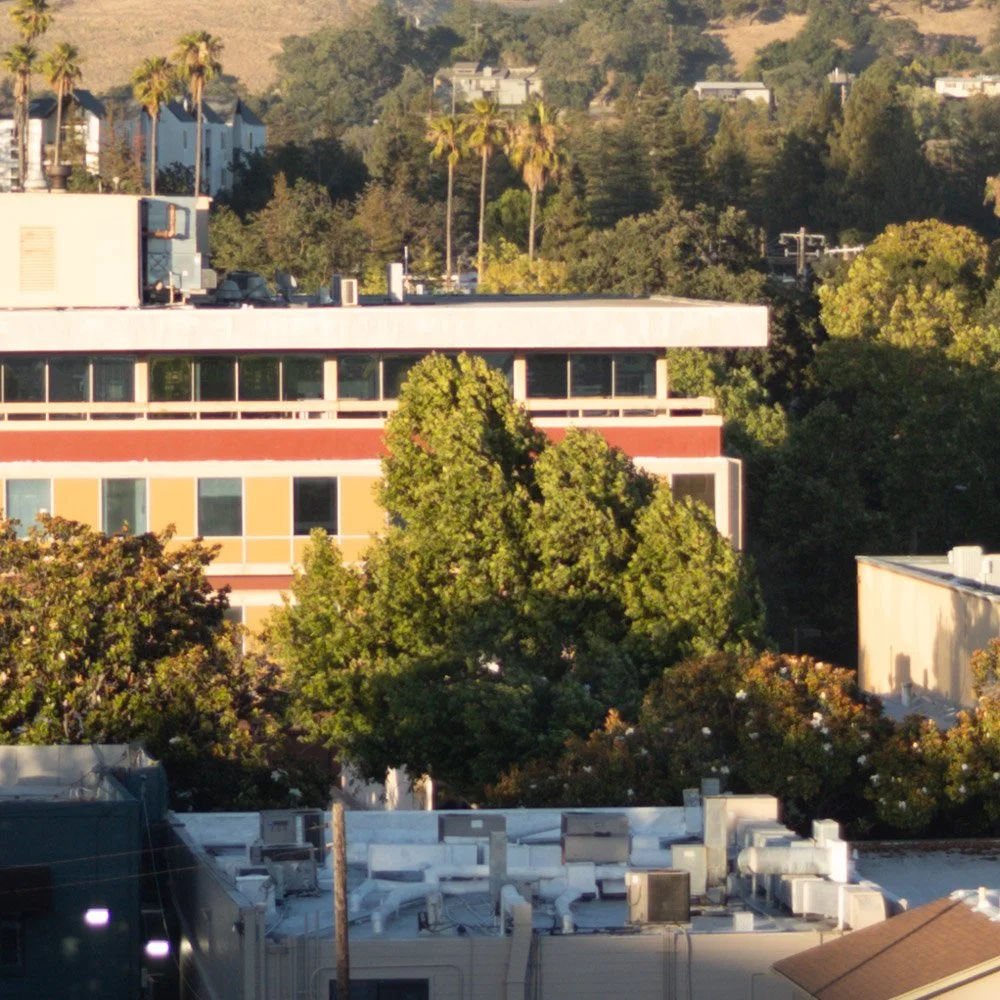
LLL 35, center @ f/1.4

Leica 35 FLE II, center @ f/2.8

LLL 35, center @ f/2.8

Leica 35 FLE II, center @ f/5.6

LLL 35, center @ f/5.6

Leica 35 FLE II, midframe @ f/1.4

LLL 35, midframe @ f/1.4

Leica 35 FLE II, midframe @ f/2.8

LLL 35, midframe @ f/2.8

Leica 35 FLE II, midframe @ f/5.6

LLL 35, midframe @ f/5.6

Leica 35 FLE II, corner @ f/1.4

LLL 35, corner @ f/1.4

Leica 35 FLE II, corner @ f/2.8

LLL 35, corner @ f/2.8

Leica 35 FLE II, corner @ f/5.6

LLL 35, corner @ f/5.6
Analysis: The LLL 35/1.4 has excellent central sharpness that matches the Summilux FLE II. There is a sharp drop-off in image quality at the midframe; stopping the LLL down to f/2.8 barely gets the midframe to the level of detail as the FLE II at f/1.4. Corners are also softer than the FLE II and stopping down to f/5.6 is needed for optimal results.
Sharpness, 1.5m:
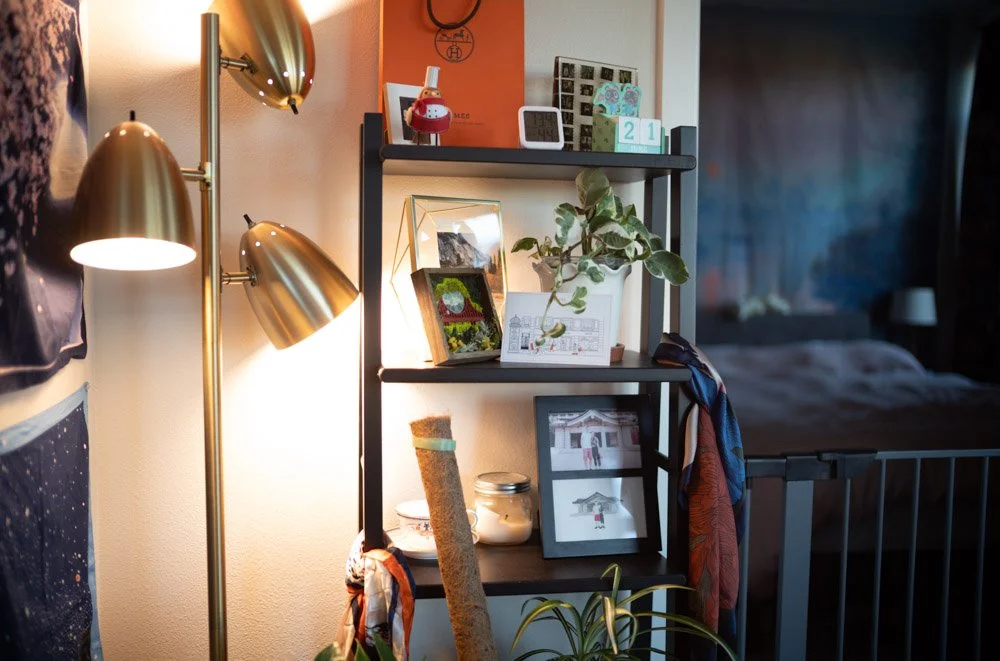

Leica 35 FLE II, center @ f/1.4

LLL 35, center @ f/1.4

Leica 35 FLE II, center @ f/2.8

LLL 35, center @ f/2.8

Leica 35 FLE II, center @ f/5.6

LLL 35, center @ f/5.6

Leica 35 FLE II, midframe @ f/1.4

LLL 35, midframe @ f/1.4

Leica 35 FLE II, midframe @ f/2.8

LLL 35, midframe @ f/2.8

Leica 35 FLE II, midframe @ f/5.6

LLL 35, midframe @ f/5.6

Leica 35 FLE II, corner @ f/1.4

LLL 35, corner @ f/1.4

Leica 35 FLE II, corner @ f/2.8

LLL 35, corner @ f/2.8

Leica 35 FLE II, corner @ f/5.6

LLL 35, corner @ f/5.6
Analysis: Similar results to infinity. Central sharpness is superb, whereas the midframe is fuzzy at f/1.4. The 35 FLE II holds a significant advantage here at all apertures tested.
Sharpness, 0.7m:


Leica 35 FLE II, center @ f/1.4

LLL 35, center @ f/1.4

Leica 35 FLE II, center @ f/2.8

LLL 35, center @ f/2.8
Analysis: There is a significant decrease in central sharpness wide-open with the LLL 35/1.4 at minimum focus distance, which is expected in a fast lens without a floating group. The 35 FLE II is significantly better in this regard. Stopping down to f/2.8 brings back sharpness to excellent levels. This is also a good test to look for focus shift, and fortunately neither of these lenses demonstrates any significant amount.
Summary and recommendations
Leica M10-R, f/1.4
Leica M10-R, f/1.4
Leica M10-R
There are two different ways to evaluate the LLL 35/1.4: as a replica of the historic Leica lens, and as a lens that makes sense to own on its own merits.
As mentioned above, the optical results of the LLL 35/1.4 are not 100% identical to the original, but pretty close. And to be honest, I don’t think the rendering of the original Leica 35 AA is all that unique. From what I can see, it’s similar to how the subsequent version of the 35 Summilux renders, with a similar amount of soap-bubble bokeh, less focus shift, less distortion, and perhaps slightly lower contrast due to less advanced coatings. I think the rarity of the Leica 35 AA contributed a lot more to its status as a collector’s item than the way it renders.
In terms of physical design and appearance, the LLL 35/1.4 is an exact replica of the original, except with a different brand engraved, and a hood that’s made of metal instead of plastic. When I was shooting with it, I felt like I was getting the real experience of shooting with the Leica 35 AA. For those who are seeking that experience, I highly recommend this lens, and saving ~$19,000 is always a good thing.
But how does the LLL 35/1.4 compare to the modern competition? I actually think it has a lot going for it. It’s very compact, has excellent image quality in the center, a pleasing rendering, and no focus shift. I still prefer using my 35 Summilux FLE II (review) due to its better sharpness in the periphery and ability to focus to 0.4m, but that lens also retails for 5x more than the LLL 35/1.4. Even a used copy of the 35 FLE V1 will cost about double the price of a new LLL 35/1.4. I would argue that the LLL 35/1.4 is the most economical way to get the experience of shooting a modern 35 Summilux.
I think one of the most interesting comparisons is against the Voigtlander 35mm f/1.5 Nokton (review), which is the other way to get a modern, compact, fast 35mm lens without spending thousands of dollars. Although I could not compare them side-by-side, I think I slightly prefer the image quality of the LLL over the Nokton. Both are soft in the mid-frame but the LLL is definitely sharper in the center, and (if my memory is accurate) has cleaner transition zones and less chromatic aberration. Favoring the Nokton are minimum focus distance (0.5m), size and weight, and price ($800 vs $1400 in the US). Ultimately, I think both are good choices depending on one’s priorities. Some will choose the Voigtlander for cost saving and perhaps close focusing, and some will choose the LLL to get more of the experience of a Summilux.
So in summary, I think LLL has done something very cool here. They’ve simultaneously replicated a virtually unobtainable lens, and made a genuinely good 35mm f/1.4 lens that significantly undercuts Leica in price. I’m excited to see what else they decide to make in the future.
Good
Center sharpness
No focus shift
Rendering and chromatic aberration control
Size and handling
Build quality and mechanics
Price
Bad
Soft mid-frame and corners
Spherical aberration at close distances
Additional reading
Fred Miranda’s review
Ed Schwartzreich’s review of the prototype and final version
PetaPixel’s review
Vincent Bihler’s review
Bobby Tonelli’s comparison vs the original
Kevin Fickling’s comparison vs the original
Pushing Film’s review
Quisque iaculis facilisis lacinia. Mauris euismod pellentesque tellus sit amet mollis.